Stuck at home, feeling full of a flu-ey cold, coughing, croaking and in need of cheering up. This did the trick!
Filed under:
Bob Dylan Weird Al
Tuesday, November 14, 2006


Saturday, November 11, 2006
Gimme that authentic backroom music
Was the late 1960s the peak period for folk clubs? They were, according to one account I read today, which described them as:
Hey, wait a minute. Either the folk scene is in a time warp or this passage is describing what many folk clubs are still like in the early 21st century. OK - audience members and artists might be older and greyer but the patterns established by the earnest young followers of the likes of Ewan McColl and Ian Campbell have changed very little. Judging by one or two folk clubs I can think of, neither has the decor in the back room of the pub!
The passage I quoted is from Britta Sweers' book, Electric Folk: The Changing Face of English Traditional Music, published last year and one of the texts that I'm covering in my literature review. The book is actually an account and attempted explanation of the emergence of English folk-rock in the 1960s and 70s. It sets out a 'sociocultural' portrayal of electic folk but also discusses generic issues arising from the fusion of the traditional and the modern.
Going back to folk clubs, Sweers argues that there was a distinct change in the 60s folk club scene. Clubs started out (in the wake of skiffle clubs) as venues for traditional music, singer-songwriters, blues and American folk music. By the mid-60s, British and Irish music were more dominant with much more emphasis on 'authentic' performances of traditional songs.
While the overall trend that Sweers describes here is fairly accurate, I would argue from my own experience that different types of club have emerged to cater for different audience tastes. This may be a sweeping generalisation on my part, but looking at the guest lists of the larger, more 'professional' folk venues, they seem to concentrate on a hybrid of the 'authentic' traditional, presented in an accessible form for modern audiences, using improvisations, complex harmonies, blues-rock guitar riffs and so on. Not sure that Ewan McColl would have approved.
The smaller, back-room-of-pubs clubs and sessions are probably more 'authentic' if you define folk as literally 'music of the people' - even if some of the people sing and play 60s popsongs, Gershwin and Wild Rover.
Filed under:
Britta Sweers folk rock folk clubs authenticity literature review
...run by private organizers and often located in back rooms of pubs... the clubs were of a strong amateurish nature, with a performance pattern consisting of an opening or warm-up performance by resident or visiting 'floor singers' followed by the featured guest performers...
Hey, wait a minute. Either the folk scene is in a time warp or this passage is describing what many folk clubs are still like in the early 21st century. OK - audience members and artists might be older and greyer but the patterns established by the earnest young followers of the likes of Ewan McColl and Ian Campbell have changed very little. Judging by one or two folk clubs I can think of, neither has the decor in the back room of the pub!
The passage I quoted is from Britta Sweers' book, Electric Folk: The Changing Face of English Traditional Music, published last year and one of the texts that I'm covering in my literature review. The book is actually an account and attempted explanation of the emergence of English folk-rock in the 1960s and 70s. It sets out a 'sociocultural' portrayal of electic folk but also discusses generic issues arising from the fusion of the traditional and the modern.
Going back to folk clubs, Sweers argues that there was a distinct change in the 60s folk club scene. Clubs started out (in the wake of skiffle clubs) as venues for traditional music, singer-songwriters, blues and American folk music. By the mid-60s, British and Irish music were more dominant with much more emphasis on 'authentic' performances of traditional songs.
While the overall trend that Sweers describes here is fairly accurate, I would argue from my own experience that different types of club have emerged to cater for different audience tastes. This may be a sweeping generalisation on my part, but looking at the guest lists of the larger, more 'professional' folk venues, they seem to concentrate on a hybrid of the 'authentic' traditional, presented in an accessible form for modern audiences, using improvisations, complex harmonies, blues-rock guitar riffs and so on. Not sure that Ewan McColl would have approved.
The smaller, back-room-of-pubs clubs and sessions are probably more 'authentic' if you define folk as literally 'music of the people' - even if some of the people sing and play 60s popsongs, Gershwin and Wild Rover.
Filed under:
Britta Sweers folk rock folk clubs authenticity literature review
Friday, November 10, 2006
Hanging out with Dylan

I haven't got round to starting my own MySpace site yet - I keep promising myself to do so, but with a major research project on the go, three blogs to maintain, a weekly newspaper column, a demanding day job, a band and a determination to hang onto some quality time with my wife (plus a dog and two cats), there haven't been enough hours left in the day.
My wife, Chele has only recently set up her own MySpace site but she has wasted no time in 'social networking' with some pretty cool 'friends'. I'm not quite sure how this works but her 'My Friends' list to date includes Seth Lakeman, Randy Stonehill, The Paperboys, Sean Lennon, Los Lonely Boys, Nickel Creek, Dixie Chicks, James Taylor, Neil Young - oh yes and Bob Dylan.
Now neither of us really believes that Mr Zimmerman sat at his computer and personally pressed the key that linked his site to Chele's - although he might have! Social networking does at least give the impression that the internet knows no barriers between celeb musicians and us humble mortals. And for Chele, setting up MySpace friendships with music heroes is proving a fascinating exercise in putting their PR strategies to the test. What started out as a bit of fun ('let's see if we can link up with 'so-and-so') has become something of a revelation. Dylan's MySpace page offers some interesting personal trivia that only 'friends' would share. Did you know, for example, that he prefers Pepsi to Coke and Burger King to MacDonalds?
I'm wondering how big a part MySpace will play in my research into amateur music networks by the time I complete the dissertation. One of my themes is the tension between 'amateur' and 'professional' practices in folk music. Will social networking websites break down the barriers - or is it creating an illusion of egalitatianism in this here global village between the folk mega-star and the humble floor singer?
Filed under:
MySpace Bob Dylan music PR amateur music
Monday, October 30, 2006
Rescuing the Polish tradition
Thanks to Dagmara for this interesting email in response to the Folk Forum blog. I have permission to reproduce it here (I have made some small edits to clarify the English).
I asked about the impact of traditional folk music in Poland. Dagmara (sorry I don't know if the writer is a he or a she) replied:
Dagmara - thanks. Hope you keep reading the blog and commenting! I wonder whether we should expect the British Department for Education to be so pro-active in promoting folk?
Filed under:
Poland folk tradition folk image music promotion
I've just read your blog from cover to cover, and to tell you the truth I can see that you're really into it but nowadays it's really hard to "save" folk-music. It's such an interesting subject and there are so many issues - but I think that it's all about the young generation!!! All the issues depend on them. From the very beginning - I think that the problem is situated in the past. I mean it's a big folk treasure as well as a disaster, that this kind of music possesses historical and traditional sources. If you try to accost some of the young people on the street and ask them "what do you think about folk music?", then you'll hear: traditional, boring, old-fashioned... It's all about stereotypes. Everybody associates folk music with those descriptions.
It's always been the case that what our parents or grandparents like is not interesting to us. It's the nature of growing up - if there is something what the young people associate with parents, they don’t like it.
The next issue is incomprehension. It's very similar with classical music - young people might like it but not for a long time. After a few compositions they'll say BORING - why? Because they don’t understand this music, they don’t know how to listen to it, how "to see" the art in it, they don’t know anything about it. There are some talented, young people who love this music but generally most of the youth don’t like it because of their incomprehension. And the same problem is with folk music - after few songs or compositions they start to feel bored, because they can't pick up on the art of this music.
There are some countries with old folk traditions like my country (Poland), and all young Poles don’t like this kind of music only because of the "age" of this music and tradition of course. I mean we respect our traditions but for us this music can't be popular, commonplace (daily music) because we have this music at every traditional celebration or wedding and we associate this music with traditions only. But there is something about this music - folk music - it's really weird that young people say 'boring, old fashion and traditional' so it means 'not for them', but at the same time those kind of big concerts like Woodstock (where there are always 3 folk bands at least)then you can see how amazing, with power, happiness and natural fascination they are dancing, singing, screaming and having a really good time - even better than to their own, favorite kinds of music. So where is the power of folk music???
In the end I just wanted to say that for me the only way to "save" and make this kind of music more popular is just try to mix it with different kinds of music. In my experience those experiments are a perfect solution. Personally I’m really interested in folk with rock music - this mix for me is just perfect. I think that more experimental music will be more liked by youth, or mix folk with electronic music - I mean I never heard this composition but it sounds interesting. I know that if you try to mix folk with different kinds of music you'll lose part of the natural folk innocence but if you wanted to save all the nature of folk music you'll be still on the same level with it like now, that there is a small group of people who are really interested to it. Nowadays the young generation has the strongest voice in the music sector, so I think that if you convince them, then you'll achieve success.
I asked about the impact of traditional folk music in Poland. Dagmara (sorry I don't know if the writer is a he or a she) replied:
...you can find Polish folk tradition in every single part of this country. It's a huge sphere of art, books, stories, celebrations, painting and music of course! Poland is a rich source of folk tradition, and to be honest with you 'one life is not enough' to do a research about it. In Poland we call it INDEPENDENT CULTURE. We have plenty of folk festivals every year, concerts, promotions of folk music, sponsors, editions, periodical newspapers, schools etc. (like I said before Poland is a huge folk market). The Polish Ministry of education try to turn young people's interest in folk traditions and mobilize them - that is all those festival are every year and it's a really big performance.
Dagmara - thanks. Hope you keep reading the blog and commenting! I wonder whether we should expect the British Department for Education to be so pro-active in promoting folk?
Filed under:
Poland folk tradition folk image music promotion
Sunday, October 29, 2006
In praise of Kate & co.

My good friend Bob Brooker wrote a review of a recent Kate Rusby concert. I'm sure he won't mind me quoting it here as it was circulated to a wide circle of local folk fans:
I had the ultimate pleasure of seeing Kate Rusby at the Arts Centre last night. (I just have to tell someone!!) I can honestly say that in fifty years of enjoying music in one form or another - this was the highlight of it all.
Her band that included John McCusker and Andy Cutting plus a superb guitarist from Orkney and an equally brilliant double bass player, along with five members of the Coldstream Guards, ("The Brass Boys!"), gave such a polished and professional performance - it is little wonder she has just won the 'Best Live Act', (it is safe to say that no other act stands a chance!), plus many other acolades. Many of the songs were from the album 'Little Lights' with a splattering of older and newer material. There's not a female singer in the whole world can equal this natural talent, plus the talents of her accompanying musicians.
If you get the chance to see this 'Autumn Tour' then go! If you hate folk music - you'll love this gig!
The review inspired one person to respond - 'so it was OK then?'
I've seen Ms Rusby on an earlier tour and she is definitely one of the best young singers in the UK folk scene (and beyond) - plus a good, media-friendly 'ambassador' for the folk movement.
Bob's final comment - 'if you hate folk music...' - highlights the continuing debate about what is folk music and what do people think is folk music? I haven't seen members of the Coldstream Guards perform on brass in a local folk club although my own band's music sessions often attract two very fine cello-players who fit in well with the more traditional fiddles, banjos, bodhrans and guitars.
Kate, John, Andy & co. clearly appeal to a much wider audience than those who regularly frequent folk clubs by drawing on 'tradition' to produce a very 'popular' form of music. They are also great originators within the genre, writing some superb songs and tunes. But much of their popularity also lies in how they perform and I wonder if this indicates a major difference between 'folk' music as performed in the 'amateur' environment of a folk club, and 'popular' music, as performed in a professional 'showbiz' environment.
The former usually focuses on the song or tune itself - who wrote it, where it came from, etc. - while the latter usually focuses on the performance - how the song is sung, how the artist relates to the audience, all the stuff they look for in the X-factor.
Filed under:
Kate Rusby folk image folk clubs folk tradition popular music
Seth Lakeman - the acceptable face of folk music
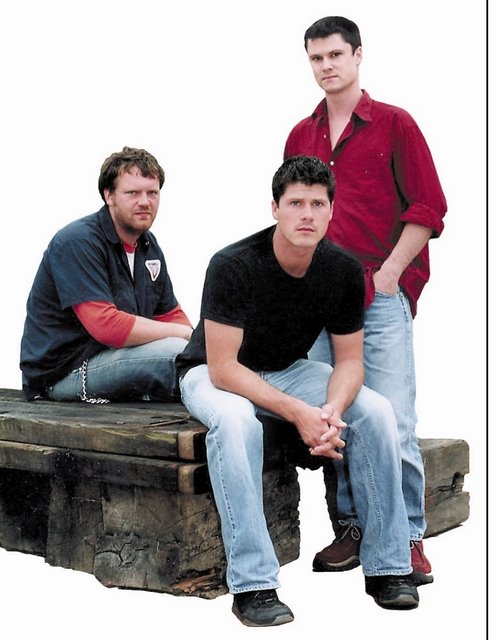
This week sees the launch of the Guardian's latest online outlet, Music Guardian which includes a section on folk music.
This is very welcome to folk fans who feel that folk is getting a bad press or, even worse, no press at all. For my own research, it offers more scope to examine the relationship between the experience of folk music at a 'grass roots' level (the humble folk club or music session) and mainstream media representations of folk.
The headline of the Seth Lakeman article raises an interesting question- 'What, no Shaggy Beard?'. The question it raises in my mind is - who is this article aimed at? It's an informative piece of writing, but can't resist at least a passing reference to the classic folk stereotype:
True, his songs are about myths, legends and stories of old, but they tell their tales with timeless melodies and ear-catching hooks more readily associated with polished pop songs. And yes, his good looks and his lack of a woolly hat, scraggy beard and knitted waistcoat haven't exactly hindered his progress.It offers Seth Lakeman as an example of folk's increasing appeal to younger people (although you tend to hear his single more on Radio 2 than Radio 1) but - and this is hardly surprising for a national newspaper - it reflects a view of folk as experienced by arts centre and festival audiences and a discourse of 'folk' celebrities, high media exposure and the 'mainstream'.
These are the criteria for 'success' in folk music. There is also an indication here of how folk music itself is becoming more accepted and acceptable within the wider media discourse. It offers younger, more glamorous protagonists who fit more readily into established ideas of what makes a 'celebrity' - much more attractive and newsworthy than sweaty morris-dancers!
Filed under:
Guardian Seth Lakeman music journalism folk image music promotion
Monday, October 23, 2006
Is this the real thing?
I'm now in the early stages of putting together a literature review. I feel like I'm standing at the base of the foothills, bracing myself for a lengthy trek through the entire mountain range of published material that relates in some way to the study of amateur music and outlets for folk and traditional music.
Last week I gave a presentation to my colleagues at UCE plus a few postgraduate students. The event was part of a series of monthly research seminars that we run in the Department of Media and Communication and I was pleased with the turn-out and interest. The presentation was similar to the one I gave at the IASPM Conference in September but included some work-in-progress.
The discussion session afterwards was quite lively (three of us continued it today outside the building during a fire alarm exercise!) and much of it focused on questions of authenticity. Is 'traditional' folk in some way a 'true' or 'pure' form of music and can it be preserved as such. How does music (or dance) get defined as 'folk' anyway - and does this description or category somehow bring the music closer to the lived experiences of 'real' people - or does it make it more distant from consumers of popular culture such as the X-factor, hip hop or Abba tribute bands?
These questions of authenticity are certainly going to be important in my own research. One colleague suggested I take a look at David Grazian's book Blue Chicago and I have now located a copy. The author knows the Chicago blues scene well, as a punter and as a musician and is interested in questions of authenticity. Do venues in Chicago offer a 'genuine', authentic experience of the blues? Hmm - does a visit to the local folk club offer a genuine, authentic experience of folk music?
Grazian discusses authenticity in an interview and addresses such questions as (basically) whether white men can sing the blues. I may well be addressing questions on whether folk music can only be performed by people over 50 (as some people seem to think!), or whether such concepts as nu-folk or folk-rock or Young Tradition awards offer a challenge to popular concepts of 'authentic' folk.
Filed under:
research proposal IASPM David Grazian blues authenticity literature review
Last week I gave a presentation to my colleagues at UCE plus a few postgraduate students. The event was part of a series of monthly research seminars that we run in the Department of Media and Communication and I was pleased with the turn-out and interest. The presentation was similar to the one I gave at the IASPM Conference in September but included some work-in-progress.
The discussion session afterwards was quite lively (three of us continued it today outside the building during a fire alarm exercise!) and much of it focused on questions of authenticity. Is 'traditional' folk in some way a 'true' or 'pure' form of music and can it be preserved as such. How does music (or dance) get defined as 'folk' anyway - and does this description or category somehow bring the music closer to the lived experiences of 'real' people - or does it make it more distant from consumers of popular culture such as the X-factor, hip hop or Abba tribute bands?
These questions of authenticity are certainly going to be important in my own research. One colleague suggested I take a look at David Grazian's book Blue Chicago and I have now located a copy. The author knows the Chicago blues scene well, as a punter and as a musician and is interested in questions of authenticity. Do venues in Chicago offer a 'genuine', authentic experience of the blues? Hmm - does a visit to the local folk club offer a genuine, authentic experience of folk music?
Grazian discusses authenticity in an interview and addresses such questions as (basically) whether white men can sing the blues. I may well be addressing questions on whether folk music can only be performed by people over 50 (as some people seem to think!), or whether such concepts as nu-folk or folk-rock or Young Tradition awards offer a challenge to popular concepts of 'authentic' folk.
Filed under:
research proposal IASPM David Grazian blues authenticity literature review
Monday, October 09, 2006
What does it take to get an audience on a rainy night?
I received a phone call tonight from a local club organiser with an update of information to include in my newspaper column. He also told me that he was closing the club in December as he wasn't getting enough audiences to cover the guests' fees. One of his forthcoming guests (I'll mention no names here as this is a public blog) had sent him very little information about themselves that he could use for publicity.
The gig was arranged on the phone and since then he had received a couple of posters but no press pack, photos, biography. I checked for websites and found none that this act were operating themselves. There was some online presence but most of it consisted of comments from other event organisers, plus a site for buying CDs online. There were no photographs of sufficient quality to be used by newspapers.
No doubt when these guests arrive, the act will be disappointed by the low audience turn-out. No doubt also that they are probably damn fine musicians travelling some distance to do the gig, so presumably they will expect the club to pay them the agreed fee even if it is evident that the club loses a lot of money that night (well - to be more precise - the organiser. The money will come out of his pocket).
For me, this highlights an observation I have often had about the UK folk circuit - in particular, acts who haven't broken into the 'mainstream' but are getting regular gigs at smaller venues. The venues are usually run by enthusiastic amateurs who do not make money from their work - in fact, they often lose money. Yet there is a business relationship of sorts set up when the gig is arranged. A fee is agreed, plus a statement of how many sets, the length of each set, arrival time, whether a PA is needed, etc. Club organisers in my experience are optimistic souls who offer the bookings with the conviction that a large crowd will show up. Often, this does not happen. And often this is because the artists are 'professional' enough to charge a fee but are still 'amateur' in their outlook, believing that the minimum amount of promotion is needed to pull in a crowd.
They have to ask themselves - why would anyone come to see me perform on a rainy night if they haven't heard of me? What message should I be putting across, via publicity offered to the folk club, to convince people to get out of their cosy homes and drive over to the venue to watch me perform? Sadly, many acts on the smaller club circuit are not honest enough with themselves to ask that question. They think that people should come to see them anyway and if people don't, it's the club's fault.
Club organisers should also ask themselves - how can I convince people to come and see this act? Is it enough to consider that I think they're worth booking? The answer to that is no, that is not enough. There has to be a compelling reason offered for audiences to give up their time, home comforts and cash to sit in your folk club and watch someone they have never seen or heard before. But, as I said, most folk club organisers are too optimistic to think that people need a much stronger reason to get out to the club than the fact the guest is a good musician. If the guest doesn't have a decent website or good quality publicity, there is nothing to give people the incentive to come and watch them perform. And sure enough, they won't.
Filed under:
folk clubs music promotion marketing
The gig was arranged on the phone and since then he had received a couple of posters but no press pack, photos, biography. I checked for websites and found none that this act were operating themselves. There was some online presence but most of it consisted of comments from other event organisers, plus a site for buying CDs online. There were no photographs of sufficient quality to be used by newspapers.
No doubt when these guests arrive, the act will be disappointed by the low audience turn-out. No doubt also that they are probably damn fine musicians travelling some distance to do the gig, so presumably they will expect the club to pay them the agreed fee even if it is evident that the club loses a lot of money that night (well - to be more precise - the organiser. The money will come out of his pocket).
For me, this highlights an observation I have often had about the UK folk circuit - in particular, acts who haven't broken into the 'mainstream' but are getting regular gigs at smaller venues. The venues are usually run by enthusiastic amateurs who do not make money from their work - in fact, they often lose money. Yet there is a business relationship of sorts set up when the gig is arranged. A fee is agreed, plus a statement of how many sets, the length of each set, arrival time, whether a PA is needed, etc. Club organisers in my experience are optimistic souls who offer the bookings with the conviction that a large crowd will show up. Often, this does not happen. And often this is because the artists are 'professional' enough to charge a fee but are still 'amateur' in their outlook, believing that the minimum amount of promotion is needed to pull in a crowd.
They have to ask themselves - why would anyone come to see me perform on a rainy night if they haven't heard of me? What message should I be putting across, via publicity offered to the folk club, to convince people to get out of their cosy homes and drive over to the venue to watch me perform? Sadly, many acts on the smaller club circuit are not honest enough with themselves to ask that question. They think that people should come to see them anyway and if people don't, it's the club's fault.
Club organisers should also ask themselves - how can I convince people to come and see this act? Is it enough to consider that I think they're worth booking? The answer to that is no, that is not enough. There has to be a compelling reason offered for audiences to give up their time, home comforts and cash to sit in your folk club and watch someone they have never seen or heard before. But, as I said, most folk club organisers are too optimistic to think that people need a much stronger reason to get out to the club than the fact the guest is a good musician. If the guest doesn't have a decent website or good quality publicity, there is nothing to give people the incentive to come and watch them perform. And sure enough, they won't.
Filed under:
folk clubs music promotion marketing
Wednesday, October 04, 2006
The man who put words to the thoughts of Billy Bragg.
Dan Davies was one of the respondents to my Screaming Headlines blog items, Confessions of a Folk Music Journalist.
He refers to his new blog - a repository of his own articles, including a piece which he ghost-wrote for Billy Bragg. Well worth a read.
Filed under:
folk journalism Billy Bragg
He refers to his new blog - a repository of his own articles, including a piece which he ghost-wrote for Billy Bragg. Well worth a read.
Filed under:
folk journalism Billy Bragg
Could young tradition contribute to the demise of folk clubs?
Here's the text of a press release that recently came my way...
What's significant about this is the drive by the BBC to promote young folk talent and there's no doubt that a generation of impressive young singers and musicians are keeping traditional music alive and accessible to younger audiences. Not just the BBC, but many organisations are working hard to keep the average age of active folk performers lower than 65!
One regular source of newblood performers is the University of Newcastle's folk and traditional music degree whose teaching staff includes Kathryn Tickell, Catriona MacDonald and Alistair Anderson. I often find myself referring to this course when writing up background details of guest artists for the Warwick Folk Festival programme.
Many of these talented youngsters are nurtured almost from birth, sometimes by parents who are themselves professional folk artists. It does raise a nagging doubt in my mind - are these youngsters being fast-tracked into folk stardom?
Many older generation folk (and non-folk) performers will extol the virtues of working the clubs and developing a professional status through experience and the University of Hard Knocks. My impression (but I have no solid evidence for this) is that many of the 'bright young things' do not have a lot of experience of travelling the country and playing the folk clubs - at least the smaller ones - but often step straight into the circuit of larger and concert-style folk venues.
Yes there are many exceptions and yes most young folksingers have some experience of folk clubs and folk sessions. Spiers and Boden come to mind as two young musicians who have hosted excellent sessions and haven't fallen into the trap of presenting themselves as instant superstars. But there is a concern in my own mind that many young performers see their musical careers as pop stars playing the larger festivals and arts centres while traditional folk clubs miss out. They can't afford to book them or have to charge pretty high admission - concert-style prices.
I took part in a Singers Night at a folk club in Coventry recently. The organiser was convinced that the club would be closed by Christmas because of falling audience support and higher fees charged by guests. Most of the people there (and there weren't many of us) were over 40 and the one young singer who turned up sang from a repertoire of old Beatles and Searchers songs (which was good to hear but not what they teach at the Univertsity of Newcastle I suspect!).
It seems to me that while the new industry of young folk talent is keeping folk music alive - i.e. making sure that the old songs and tunes are still being played and heard - it is also a possible factor in the demise of the informal, low-budget, backroom-of-the-pub folk clubs.
Filed under:
BBC Young Folk Award Newcastle University folk degree folk clubs
Stratford sees an explosion of Young Talent
BBC Radio 2 Young Folk Award 2007
On Saturday 14 October 2006 the Civic Hall in Stratford-upon-Avon will be filled with the sounds of some the best up and coming young talent performing folk, roots and acoustic music as part of the BBC Radio 2 Young Folk Award 2007. BBC Radio 2’s Mike Harding Show has invited 12 of the many soloists, groups and duos that entered this prestigious competition to attend a Semi-final Weekend in Stratford- upon-Avon.
On Saturday evening at 7.30pm the Semi-finalists will take to the stage in a public Audition Concert where the BBC Radio 2 Young Folk Award judges will choose acts to go through to the Final to be held in London on 1 December 2006.
Tickets for the Audition Concert are free and open to everyone but booking early is advised as numbers are limited. To reserve a ticket please contact the Civic Hall on 01789 207100.
These young performers are all aged between 15-20. They will spend the weekend learning new skills from high profile musicians Robert Harbron and Eliza Carthy and be taught the tricks of the music trade, immersing themselves in making music and song.
The finalists will be announced on Mike Harding’s show on Wednesday 18 October, 8-9pm on BBC Radio 2 and the Final can be heard on BBC Radio 2 on Wednesday 6 December, 8-9pm.
The winning act from the Final will record a session to be broadcast on BBC Radio 2’s Mike Harding Show, appear at three top UK festivals - BBC Radio 2 Cambridge Folk Festival, Towersey Village Festival and Fairport’s Cropredy Convention and receive a year’s free membership to the Musicians’ Union.
Previous winners include Tim van Eyken who now has a successful solo career having been a regular member of Waterson:Carthy, exciting Celtic group Uiscedwr who have performed at many of the UK’s festivals and Scottish fiddle player Lauren MacColl, who has recently been seen performing with BBC Radio 2 Horizon Folk Award 2006 winner, Julie Fowlis.
What's significant about this is the drive by the BBC to promote young folk talent and there's no doubt that a generation of impressive young singers and musicians are keeping traditional music alive and accessible to younger audiences. Not just the BBC, but many organisations are working hard to keep the average age of active folk performers lower than 65!
One regular source of newblood performers is the University of Newcastle's folk and traditional music degree whose teaching staff includes Kathryn Tickell, Catriona MacDonald and Alistair Anderson. I often find myself referring to this course when writing up background details of guest artists for the Warwick Folk Festival programme.
Many of these talented youngsters are nurtured almost from birth, sometimes by parents who are themselves professional folk artists. It does raise a nagging doubt in my mind - are these youngsters being fast-tracked into folk stardom?
Many older generation folk (and non-folk) performers will extol the virtues of working the clubs and developing a professional status through experience and the University of Hard Knocks. My impression (but I have no solid evidence for this) is that many of the 'bright young things' do not have a lot of experience of travelling the country and playing the folk clubs - at least the smaller ones - but often step straight into the circuit of larger and concert-style folk venues.
Yes there are many exceptions and yes most young folksingers have some experience of folk clubs and folk sessions. Spiers and Boden come to mind as two young musicians who have hosted excellent sessions and haven't fallen into the trap of presenting themselves as instant superstars. But there is a concern in my own mind that many young performers see their musical careers as pop stars playing the larger festivals and arts centres while traditional folk clubs miss out. They can't afford to book them or have to charge pretty high admission - concert-style prices.
I took part in a Singers Night at a folk club in Coventry recently. The organiser was convinced that the club would be closed by Christmas because of falling audience support and higher fees charged by guests. Most of the people there (and there weren't many of us) were over 40 and the one young singer who turned up sang from a repertoire of old Beatles and Searchers songs (which was good to hear but not what they teach at the Univertsity of Newcastle I suspect!).
It seems to me that while the new industry of young folk talent is keeping folk music alive - i.e. making sure that the old songs and tunes are still being played and heard - it is also a possible factor in the demise of the informal, low-budget, backroom-of-the-pub folk clubs.
Filed under:
BBC Young Folk Award Newcastle University folk degree folk clubs
Subscribe to:
Posts (Atom)